Buying land around Jefferson and the 28640 ZIP is exciting, but the details behind access, utilities, and surveys can make or break a deal. If you are looking at a mountain parcel, you already know views come easy while roads, wells, septic, and line extensions can be tricky. This guide gives you clear next steps, local contacts, and what to verify before you commit. Let’s dive in.
Road access basics
Legal access is not the same as being able to drive to the property. You need a recorded easement, a public right of way, or a dedicated road shown in the deed or plat. You can check recorded documents with the Ashe County Register of Deeds through the county departments page. Visit the Ashe County departments page to confirm where to pull deeds and plats and who to call with questions. You can start with the county contact list at the Ashe County departments hub: Ashe County departments.
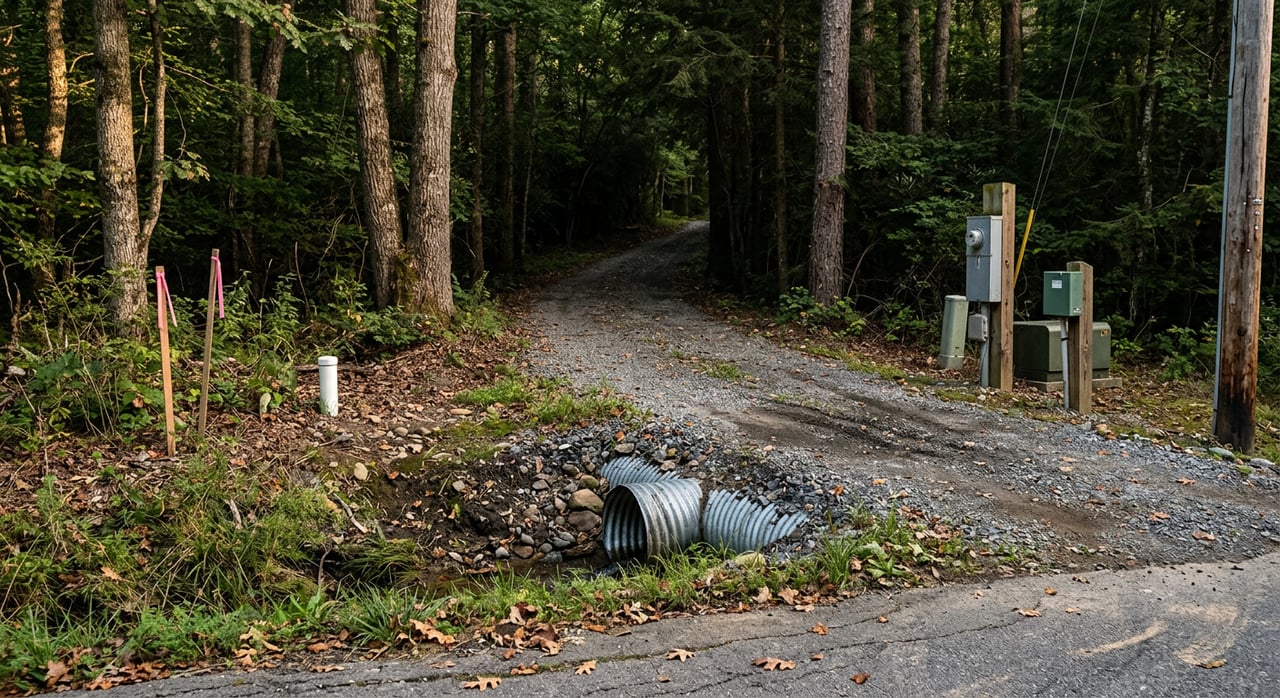
If your driveway connects to a state highway, North Carolina requires a driveway or encroachment permit. The North Carolina Department of Transportation sets sight distance, grading, and culvert standards for new entrances. Review the policy and plan time for approvals here: NCDOT driveway access policy.
If a road is described as public but not clearly maintained by the county or state, confirm who handles winter plowing and repairs. In Ashe County, many lanes are private and owner maintained. If you are unsure, contact E911 addressing or Planning through the county departments directory to confirm road status.
Access checklist
- Ask the seller for recorded easements, road maintenance agreements, and any HOA or POA covenants that cover the road. Verify them at the Register of Deeds. Start here: Ashe County departments.
- Visit in winter or ask neighbors about snow and seasonal access. Request current photos of the lane and a note on who maintains it.
- If you plan a new driveway to a state or county road, budget time for permits and possible culverts or sightline work. See: NCDOT driveway access policy.
Utilities: what to expect
Rural Ashe County parcels often sit outside town utilities. Expect to plan for electric service, internet, and typically a private well and on‑site septic. Availability changes quickly with elevation and distance from town.
Power from Blue Ridge Energy
Much of the county is served by Blue Ridge Energy. The cooperative usually provides a standard connection allowance, then charges for any line extension beyond that allowance. Those costs vary by distance, terrain, and whether service is overhead or underground. Easements may be required for poles and lines. Contact the co‑op early and ask for a written site‑specific quote and the service rules: Blue Ridge Energy service and agreements.
Internet options
Fiber service is present in town corridors and has expanded into parts of Jefferson and West Jefferson. Availability can drop off with elevation and distance from fiber routes. Many outlying sites rely on fixed‑wireless or satellite. Confirm options and speeds by address with local providers like SkyLine/SkyBest: SkyBest regional fiber overview.
Heating and fuel
Natural gas is not widely available across mountain parcels. Many owners use propane, electric, wood, or heat pumps. If a listing mentions natural gas nearby, verify that a line and meter are actually accessible and serviceable at the property.
Wells and septic
Most rural parcels will need a private well and an on‑site septic system. Ashe County uses AppHealthCare for soil and site evaluations, improvement permits, construction authorizations, and operation permits. Improvement and well permits commonly expire in five years, which is important if you plan to hold the land before building. Review the application steps and timelines in the county packet: AppHealthCare septic and well packet.
North Carolina’s statewide rules for on‑site wastewater, known as 15A NCAC 18E, set the technical standards used by local environmental health staff. The site and soil evaluation will determine whether a conventional drainfield, a mound, or another system type is suitable. You can read the statewide standards here: NC on‑site wastewater rules 15A NCAC 18E.
Utility action steps
- Ask the seller or listing agent for any existing well logs, septic permits, soil evaluations, and operation permits. If none exist, plan a site evaluation after you have an accepted offer. See the checklist: AppHealthCare septic and well packet.
- Request electric availability and a line‑extension quote from Blue Ridge Energy. Ask for written terms and any easement requirements: Blue Ridge Energy service and agreements.
- Check broadband availability by address and ask about buildout plans. Start here: SkyBest regional fiber overview.
Surveys and boundaries
Surveys confirm exact boundaries, locate corners, and reveal encroachments or easements that affect how you can use the land. Lenders and title companies often require a current survey, and it is smart to order one before you design a driveway or home site.
Common survey types
- Boundary survey. Confirms the legal boundary and pin locations. Useful for marking corners and fencing.
- Improvement Location Certificate or short survey. A basic sketch that places improvements relative to the boundary. It may work for some loans, but lenders vary.
- ALTA/NSPS Land Title Survey. The most detailed option, typically used when lenders or title insurers want a full picture of records, easements, and improvements. The ALTA/NSPS minimum standards were updated with a new version effective February 23, 2026. Confirm which standard your lender or title company requires: Understanding the 2026 ALTA/NSPS standards.
- Topographic survey. Maps slope and features. Helpful on steep sites to plan septic, the driveway, and erosion control.
Hiring a surveyor
Always hire a North Carolina licensed Professional Land Surveyor. Ask for the PLS license number and a sample plat so you know what to expect. You can learn about PLS licensing through the state board: NC Board of Examiners for Engineers and Surveyors.
Due diligence, step by step
Pre‑offer. Review the listing for a recorded plat, easements, and any septic or well permits. Use county GIS to screen parcel lines and nearby roads. Check deed history and plats through the Register of Deeds. Start with the map viewer: Ashe County GIS parcel viewer and the county departments list: Ashe County departments.
Under contract. Order the survey required by your lender or title company. Schedule the AppHealthCare site and soil evaluation for septic and well feasibility. Request written quotes for electric line extension and confirm internet availability. See the county packet for steps, fees, and timelines: AppHealthCare septic and well packet.
Decision time. If access, septic, or utilities do not meet your needs or budget, negotiate or walk away per your contract contingencies. Work with your agent and, when needed, an attorney to be sure the right protections are in place.
Quick buyer checklist
- Verify recorded legal access and a road maintenance agreement. Pull easements at the Register of Deeds via the county directory: Ashe County departments.
- Ask for existing well logs, septic permits, or operation certificates. If none, schedule a site evaluation: AppHealthCare septic and well packet.
- Contact Blue Ridge Energy for an electric line‑extension quote: Blue Ridge Energy service and agreements. Check broadband options with local ISPs: SkyBest regional fiber overview.
- Order a boundary survey, topo, or ALTA survey as required. Hire a licensed NC PLS: NC Board of Examiners for Engineers and Surveyors.
- Check flood risk in FEMA’s maps and review county GIS for streams or mapped floodplain: FEMA Map Service Center and Ashe County GIS parcel viewer.
Local knowledge that saves time
The fastest path to a smooth land purchase is a clear plan and the right contacts. Call the county early to confirm how roads are classified, how addresses are assigned, and which permits you will need for your build. Line up quotes from the power co‑op and internet providers, and schedule the septic and well evaluation as soon as your offer is accepted. A few early calls can prevent surprises later.
If you want help sequencing the steps, reviewing plats, or coordinating quotes while you are out of town, reach out. As a lifelong local with hands‑on land experience, I can help you quickly verify the key items that matter most in Ashe County.
Ready to evaluate a specific parcel in 28640 or anywhere in Ashe County? Connect with Jeff Dollar for local guidance and a step‑by‑step plan for due diligence.
FAQs
Do I need a perc test for septic on Ashe County land?
- The local health department performs a soil and site evaluation that determines your system type. Review steps and timelines in the county packet: AppHealthCare septic and well packet.
Who pays to bring electric power to my rural lot?
- Blue Ridge Energy typically covers a standard allowance, and you pay for line extension beyond that amount. Request a written quote and easement requirements: Blue Ridge Energy service and agreements.
Can I get a mortgage on raw land in 28640?
- Lenders often require confirmed legal access, a survey, and evidence of feasible septic and well or municipal utilities. Have recorded plats and any permits ready. Start with county contacts here: Ashe County departments.
How do I check flood risk before I buy?
- Search FEMA’s official maps for the parcel. If any portion is in a Special Flood Hazard Area, a lender may require flood insurance: FEMA Map Service Center.