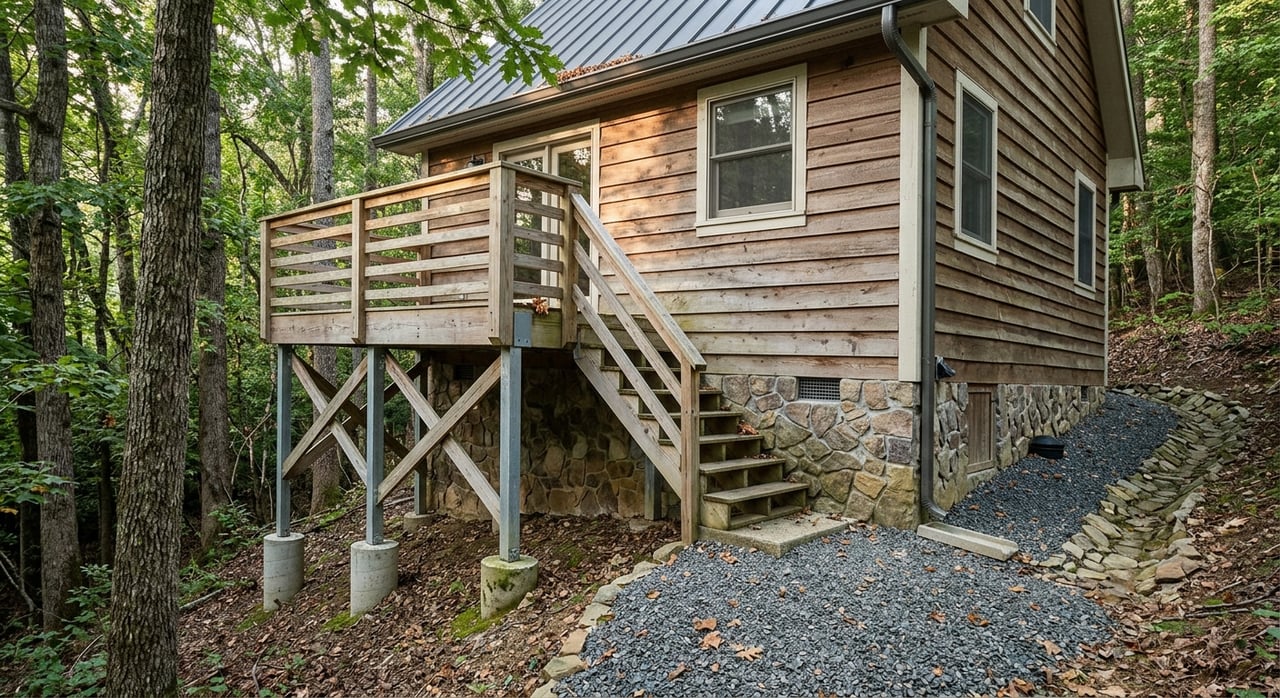
Buying your first mountain home in Boone can be exciting, but it also comes with a learning curve. Unlike a typical suburban purchase, your decision is not just about the house itself. In Boone, the lot, the road, the driveway, drainage, and winter access can all shape your day-to-day ownership experience. If you understand those mountain-specific factors early, you can buy with more confidence. Let’s dive in.
Why Boone homes need a closer look
Boone sits high in the mountains, with the Town of Boone noting an elevation of 3,333 feet above sea level. Nearby climate data from NOAA’s Boone 1 SE station at 3,100 feet shows a mean annual temperature of 50.2°F, about 59.13 inches of annual precipitation, and 25.6 inches of annual snowfall. January and February each average roughly 6.6 to 6.7 inches of snow, which gives you a good sense of the seasonal conditions you may face as a homeowner. You can review Boone’s business and community overview on the Town of Boone website.
That mountain setting is part of Boone’s appeal, but it also changes how you should evaluate property. In some areas, drainage patterns and slope can affect usability, maintenance, and long-term costs. The town notes that drainage from surrounding hills and mountains makes downtown Boone and lower areas to the southeast more prone to frequent flooding, which is a reminder that topography matters as much as finishes and square footage in this market.
For first-time buyers, this means you want to look beyond the kitchen and the view. A great Boone property should work well in dry weather, rainy weather, and winter weather. That starts with understanding the land.
Focus on the lot first
In Boone, the lot is not just where the house sits. It is part of the property’s value and function. A steep driveway, poor drainage path, or limited parking area can create issues that are easy to miss during a sunny showing.
North Carolina home inspection standards require inspectors to evaluate exterior features like driveways, walkways, retaining walls, grading, and drainage as they affect the building. Inspectors must also review the foundation, floors, walls, ceilings, roof, crawl spaces, basements, and attics when accessible, and report abnormal water penetration or condensation. You can see those standards in the North Carolina home inspector rules.
Still, a general inspection has limits. Those standards do not require an inspector to evaluate geological or soil conditions. In a mountain market like Boone, visible slope movement, retaining wall concerns, or site stability questions may call for a structural engineer or geotechnical specialist in addition to a standard home inspection.
Check road access and driveway details
Access can be one of the biggest differences between a Boone home and a home in a more typical neighborhood. Some roads are state maintained, while others may be private or municipal. Boone’s development rules allow private streets in residential developments, but they require maintenance arrangements to be recorded and require disclosure about whether a road is public or private.
That matters because road status can affect maintenance responsibility, winter access, and future costs. Boone buyers should review the road situation early, especially if a property is outside a more traditional in-town setting. You can cross-check road ownership and maintenance status using the NCDOT HB620 road database.
If a property may need a new driveway or a revised connection to the State Highway System, NCDOT says a driveway permit is required. According to the agency’s driveway permit FAQ, simple requests may take four weeks or less, while more complex cases can take eight weeks or more. That is important if you are buying land, planning improvements, or looking at a property with unusual access.
Plan for winter and weather
Boone’s weather is part of the lifestyle, but it should also be part of your due diligence. The town’s Street Division says snow and ice season can begin as early as the end of October and last until the beginning of April. During storms, arterial streets are treated first, and waste and recycling routes only run if streets are passable, according to Boone Street Maintenance Services.
For you as a buyer, that means a home can feel very different after snow or heavy rain than it does during a perfect-weather showing. A driveway that looks manageable in dry conditions may be more difficult when icy. Parking, turning around, and entering or exiting the property can also change when weather moves in.
If you are buying from out of town, it is smart to revisit the property after rain or snow when possible. If you cannot be there in person, ask for a live video tour that shows the driveway grade, access points, parking area, and drainage flow under real conditions. For remote buyers especially, that extra step can help prevent surprises.
Screen for flood risk early
Flood screening is another key step in Boone. The town says its adopted Flood Insurance Rate Maps identify Special Flood Hazard Areas, where the one-percent annual chance flood standard applies. If a property is in one of those areas, the flood-insurance purchase requirement may apply.
The official place to verify flood hazard information is FEMA’s Flood Map Service Center. If a home is in or near a mapped flood zone, ask whether the property has an elevation certificate. Boone notes that flood records for new buildings and substantial improvements in Special Flood Hazard Areas must show elevation information, and that certificate can be used when obtaining flood insurance. More details are available on the town’s Special Flood Hazard Areas page.
This step matters most for homes near creeks, low spots, or steeper drainage paths. Even if the house itself looks fine, the surrounding land can affect future insurance needs and property use.
Prioritize the right inspections
A first mountain home purchase in Boone often calls for a broader inspection mindset. A general home inspection is still essential, but some systems deserve extra attention because they are more likely to create unexpected costs.
Here are the top items to prioritize:
- Roof: Weather exposure and snow can make roof condition especially important.
- Drainage: Look at how water moves around the home and away from the foundation.
- Crawl space or basement: Watch for moisture, water penetration, and ventilation issues.
- Retaining walls: These can signal site stability and maintenance concerns.
- Driveway and access: Check slope, traction, width, and ease of use.
- Well and septic systems: If the property is not on public utilities, request records and inspections.
- Radon: Testing is recommended for all homes in North Carolina.
If the home uses a private well, North Carolina says newly constructed wells must be tested before being used for drinking water, and existing wells should be tested regularly and after repairs or flooding. The state also notes that Watauga County is one of the counties where testing both indoor air and private well water for radon is recommended. You can learn more in the NCDHHS well water FAQs.
If the home uses a septic system, ask for the permit file and any service history. NCDHHS says about half of homes in North Carolina use septic systems and recommends pumping most tanks every three to five years. The state also lists warning signs like slow drains after rain, soggy or smelly yard spots, and sewage backups on its septic system care guidance.
Radon should be on your list too. NCDHHS recommends that every home be tested for radon and advises using a test on the lowest occupied level for at least 48 hours. The state recommends action if indoor air results are 4 pCi/L or higher, according to the North Carolina Radon Program.
Build a smart Boone offer
Recent public market snapshots suggest Boone buyers may have some room to negotiate, but not enough room to skip important protections. In this kind of market, a smart offer usually keeps the key contingencies in place rather than chasing speed at the expense of due diligence.
For a first-time buyer, that often means protecting yourself with contingencies tied to:
- Home inspection
- Well inspection or water testing
- Septic review
- Radon testing
- Road access or private-road documentation
- Flood-zone review when applicable
If the property is on a private street, ask for the road-maintenance agreement or HOA documents. Boone’s development rules require maintenance provisions for private streets and disclosure of whether roads are public or private. If the property may be in a flood-prone area, ask for flood map information and any elevation certificate. If there is a well or septic system, request permits and service records before you get too far into the process.
These are not minor details in a mountain market. They are often the difference between a smooth ownership experience and an expensive surprise.
What remote buyers should do differently
If you are buying your first Boone home from another city or state, you will likely need more than listing photos and a quick showing. Mountain properties can look similar online while functioning very differently in person.
This is where local guidance and careful documentation matter. Ask for clear video walk-throughs of the driveway, parking area, crawl space access, retaining walls, drainage paths, and the road leading to the property. If weather allows, seeing the property after rain or snow can give you a more realistic picture of access and maintenance.
A hands-on local agent can help coordinate those extra steps, gather documents, and help you understand what is typical for Boone and what may deserve a closer look. That kind of practical support can be especially valuable when you are buying your first home in the High Country from a distance.
Buying your first mountain home in Boone should feel exciting, not overwhelming. When you pay attention to land, access, drainage, utilities, and inspections from the start, you put yourself in a much stronger position to make a smart decision. If you want local, plainspoken guidance as you explore Boone and the surrounding High Country, connect with Jeff Dollar for practical help every step of the way.
FAQs
What makes buying a first home in Boone different from buying in a suburb?
- Boone buyers need to evaluate slope, drainage, road access, driveway conditions, and winter weather exposure along with the home itself.
How can you tell if a Boone road is private or public?
- You can review property documents and check the NCDOT HB620 road database to help confirm whether a road is state maintained or private.
What flood check should you do before buying a Boone home?
- You should review the property on FEMA’s Flood Map Service Center and ask for an elevation certificate if the parcel is in or near a mapped flood zone.
What inspections matter most for a first Boone mountain home?
- The highest priorities usually include the roof, drainage, crawl space or basement, retaining walls, driveway access, well or septic systems, and radon testing.
What should remote buyers ask for when buying a Boone property?
- Remote buyers should request detailed video tours, road and access documentation, utility records, and if possible a revisit or live walk-through after rain or snow.
Do you need radon testing when buying a home in Boone, NC?
- Yes. North Carolina recommends radon testing for every home, and Watauga County is one of the counties where testing indoor air and private well water for radon is recommended.