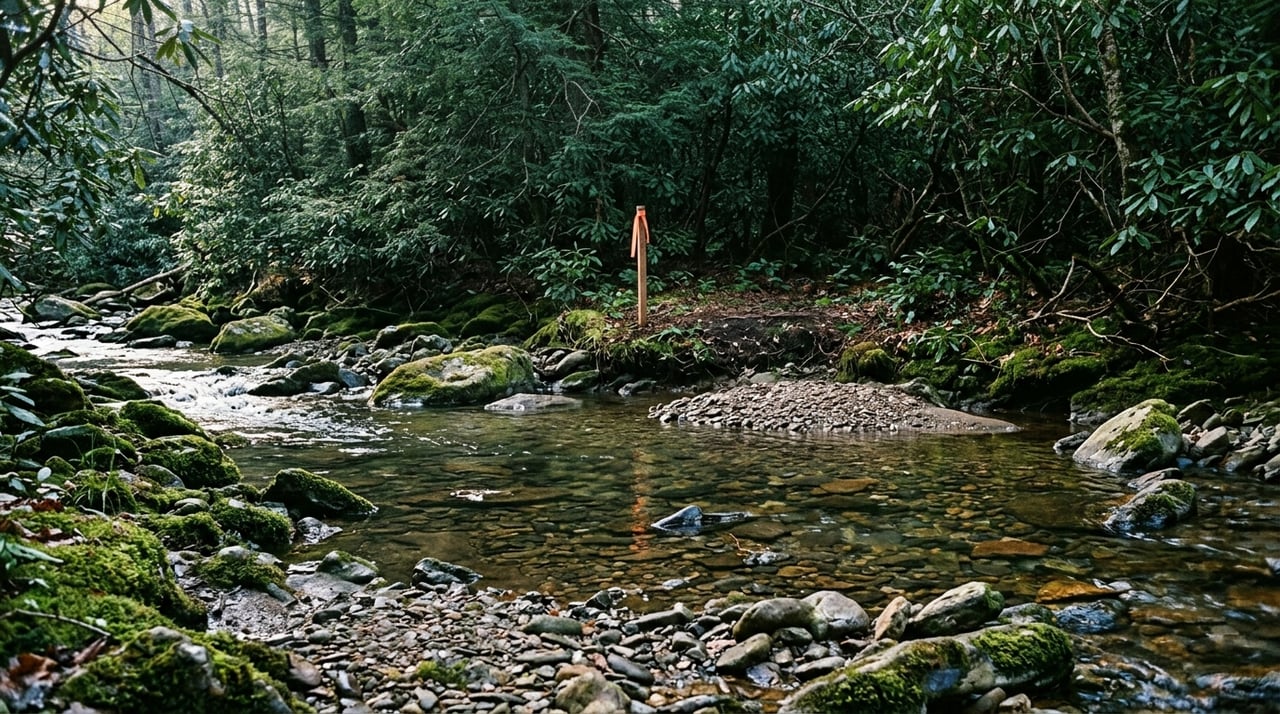
If you have ever fallen in love with a mountain view or the sound of water running through a property, you already know how easy it is to picture your future there. In Alleghany County, that dream can be very real, but raw land takes more homework than a home that is already built. The good news is that when you know what to check early, you can avoid surprises and move forward with more confidence. Let’s dive in.
Why Alleghany County draws land buyers
Alleghany County stands out for buyers who want scenic mountain property with a strong outdoor setting. The county’s planning documents highlight its rural character, public lands, and efforts to protect land and water resources, which helps explain why view lots and creekside parcels continue to attract attention.
The setting matters here. The Blue Ridge Parkway runs across the county, and nearby public lands include New River State Park and Stone Mountain State Park. Since 2020, High Country counties have also seen more interest from second-home buyers and remote workers, which lines up with what many buyers are looking for in a mountain cabin site.
New River State Park adds another layer of appeal. The park includes Alleghany access points along the National Wild and Scenic River, with places for kayak and inner-tube launching. If you want land that puts you close to mountain scenery and river recreation, Alleghany County checks a lot of boxes.
What to check before you make an offer
Buying land is not just about whether the photos look beautiful. With view and creekside property, the most important question is whether the parcel gives you a practical, buildable site that fits your plans.
View lot orientation matters
On a mountain parcel, a big view is only part of the story. The direction the homesite faces, the tree cover, and the way the house would sit on the land can all affect comfort and design.
General daylighting guidance shows that south-facing openings tend to capture more winter sun, while east- and west-facing exposure can create more glare and summer heat gain. In simple terms, that means you should look at the view, sun, slope, and homesite placement together instead of treating them as separate issues.
Creek proximity needs careful review
A creek can add beauty, sound, and natural character to a property. It can also affect where and how you build.
Alleghany County notes that steep slopes can make construction impractical, and flood hazard zones can limit or even prohibit building in floodways. The county has also adopted a Flood Damage Prevention Ordinance for special flood hazard areas identified by the state and FEMA, so creekside land deserves extra review before you get too far into planning.
County review starts with site conditions
Alleghany County’s building application asks for details that tell you exactly what local officials care about. The form asks for the stream name, distance to the stream, whether the parcel is in a floodplain, whether it is on a ridge, and whether it is near the Blue Ridge Parkway.
That is a strong clue for buyers. If those questions show up on the permit paperwork, they should also be part of your due diligence before you commit to the property.
Ridge and watershed rules can affect plans
Some mountain parcels come with added development rules. Alleghany County regulates protected ridges and water supply watersheds, and those rules can shape what is possible on the land.
The county says its Mountain Ridge Protection Ordinance applies to protected mountain ridges that rise 500 feet or more above the adjacent valley floor. It also has a Watershed Management and Protection Ordinance for designated water supply watersheds, with rules tied to density, buffers, and watershed permits. For buyers, this means the prettiest site on a parcel may not always be the simplest one to build on.
Access can make or break a land purchase
A great homesite still needs workable access. If the driveway connection is to the State Highway System, North Carolina requires a driveway permit for development, redevelopment through expansion, changes in use, or altered access.
According to NCDOT, that permit process looks at design, drainage, traffic impacts, and safety. The first step is to coordinate with the local land-use authority and the local district engineer. In practical terms, you want to understand access early, not after you have already designed the house.
Understand the permit sequence early
One of the biggest mistakes land buyers make is assuming the building permit comes first. In Alleghany County, the order matters.
The county’s Planning and Inspection office handles issues like floodplain management, subdivision, ridge development, and watershed protection. That means one raw parcel can trigger more than one review path depending on its location and features.
Start with septic and well approvals
Alleghany County’s Planning and Inspection FAQ says buyers must go to the Appalachian District Health Department first for approval of the sewage disposal plan before the county will issue a building permit packet. That is a key step for anyone buying undeveloped land.
AppHealthCare’s septic and well checklist gives a practical sequence. Buyers should mark property lines and irons, stake the proposed house site, well site, and driveway, call 811, and submit a survey plat or schematic plus a site plan.
From there, the process moves through:
- Improvement Permit
- Construction Authorization
- New-well permit or compliance permit
- Operation Permit needed for the certificate of occupancy
The same checklist says site suitability depends on soil conditions, available space, topography, and water features. That is especially important for view lots with slope and creek lots with tighter usable areas.
Inspections and water testing are part of the process
Alleghany County says every step of construction is inspected and that at least five inspections are required. Buyers should plan for that timeline from the beginning.
For wells, North Carolina requires all newly constructed private wells to be tested by the State Lab or a state-certified commercial lab within 30 days of completion before the well is used as a drinking-water source. If you are buying a cabin site, this is one more reason to think of the project as a sequence, not a single permit event.
Some projects trigger added requirements
Not every land purchase leads to the same level of review. Still, there are a few triggers buyers should know.
Alleghany County’s contractor packet says projects over $30,000 require a lien agent. It also says commercial projects over $90,000 or modular structures require signed and sealed engineered plans, and log structures need engineer-sealed connection drawings.
Erosion control is another big one. The county says an approved erosion control plan is required before a county building permit can be issued if land-disturbing activity occurs within 25 feet of a lake or natural watercourse, within 25 feet of trout waters, or on more than one acre. NC DEQ also states that construction activity disturbing more than one acre requires an approved erosion and sedimentation control plan plus coverage under the Construction General Stormwater Permit.
Why surveyors and builders matter so much
With mountain land, the professionals you choose can save you time, money, and frustration. A listing map or planning map is not enough when you are trying to figure out where you can actually build.
Use a licensed surveyor
A North Carolina-licensed professional land surveyor can help confirm boundaries, stream locations, and the real buildable envelope. That is important because Alleghany County notes its planning maps are for reference only and are not a substitute for survey or legal use.
This also matches the septic and well application process, which expects a survey plat or schematic. If you are buying creekside land or a ridge parcel, a proper survey is one of the smartest early investments you can make.
Choose a builder with mountain-site experience
North Carolina requires a general contractor license when contract value is $40,000 or more, and Alleghany County’s permit packet asks for contractor license numbers. Beyond the license itself, experience matters.
On raw land, the best builder is often one who has worked on mountain sites before and understands how survey, septic, well, driveway, and erosion-control steps fit together. That kind of coordination can help keep your project moving and reduce expensive missteps.
Smart questions to ask before buying land
If you are comparing parcels in Alleghany County, keep your questions practical and site-specific. A beautiful listing is a starting point, not the finish line.
Ask questions like these:
- Is the preferred homesite outside the floodplain, ridge-protection area, and watershed constraints?
- Can the driveway be permitted from the existing road access, and will an NCDOT permit be needed?
- Is there enough room for the house, septic field, well, and construction access once the site is staked?
- Has a licensed surveyor confirmed the corners, stream distance, and buildable area?
- Will the builder handle county permitting, health department approvals, and any needed engineered drawings or erosion-control steps?
How local guidance helps you buy with confidence
Buying view or creekside land in Alleghany County can be exciting, but it also rewards a careful, local approach. The right parcel is not just scenic. It is a property where the homesite, access, permits, and utilities all work together.
That is where local knowledge can make a real difference, especially if you are buying from out of town or trying to compare several mountain parcels at once. When you understand the county review process, health department steps, and site-specific issues before you offer, you put yourself in a much stronger position.
If you are exploring land in Alleghany County and want a steady local guide through the details, Jeff Dollar can help you evaluate mountain property with a practical, boots-on-the-ground perspective.
FAQs
What should you check first when buying creekside land in Alleghany County?
- Start by checking topography, floodplain status, stream distance, and whether the parcel has a practical buildable area for a house, septic system, well, and driveway.
What permits matter for building on raw land in Alleghany County?
- Before a county building permit packet is issued, buyers must first get sewage disposal approval through the Appalachian District Health Department, and some parcels may also involve floodplain, ridge, watershed, driveway, or erosion-control review.
What does a survey help confirm on an Alleghany County land purchase?
- A licensed surveyor can help confirm property boundaries, stream locations, corners, and the actual buildable envelope, which is especially useful on ridge and creek parcels.
What should you know about driveway access for Alleghany County land?
- If your project connects to the State Highway System, a driveway permit may be required through NCDOT, and the review can involve design, drainage, traffic impacts, and safety.
What affects septic and well approval for mountain land in Alleghany County?
- AppHealthCare says approval depends on soil conditions, available space, topography, and water features, so scenic land is not always automatically suitable for the layout you want.