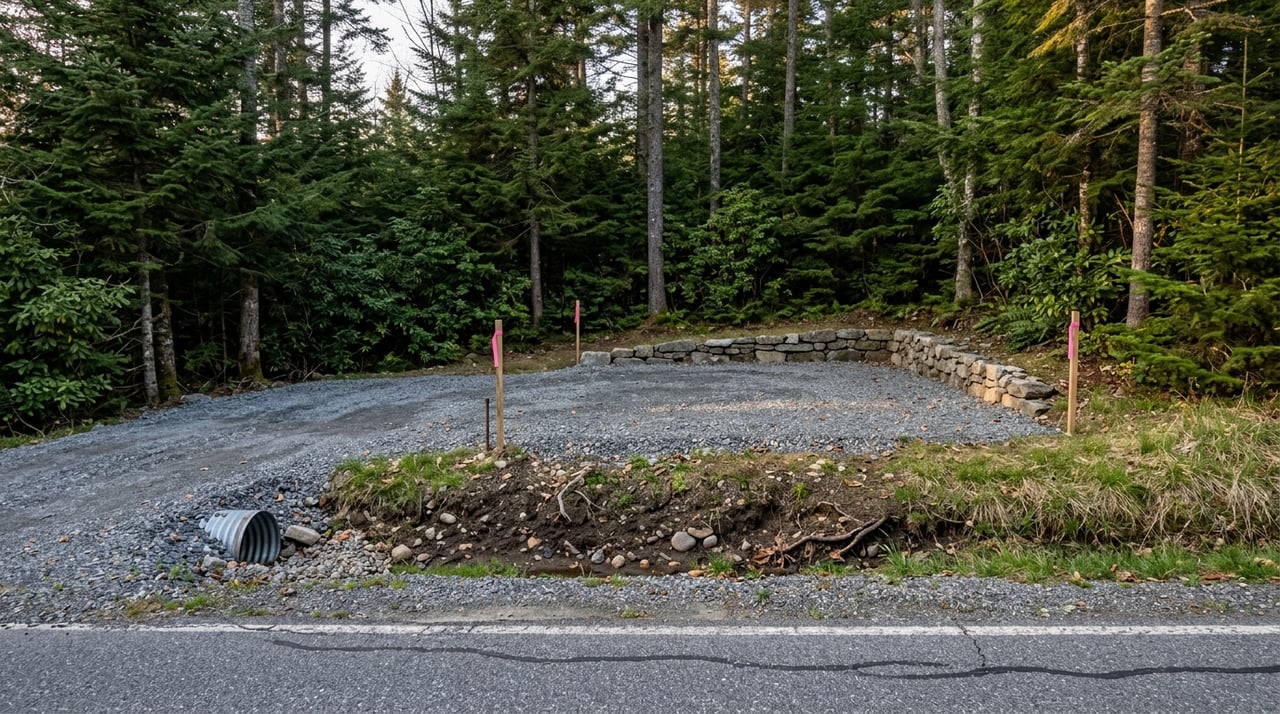
Looking at a few acres in Watauga County can feel simple at first glance. You see road frontage, mountain views, or a nice spot near Boone and think the opportunity is obvious. But in this market, small acreage value often comes down to what you can legally access, build, finance, and eventually resell. If you want to make a smarter land decision, this guide will walk you through the local checks that matter most. Let’s dive in.
Why Small Acreage Works Here
Watauga County is a mountain market with a lot of moving parts packed into a relatively small area. The U.S. Census Bureau estimated the county’s 2024 population at 54,997, and Appalachian State University reports enrollment of more than 21,000 students across its Boone and Hickory campuses and online. That mix of full-time residents, students, second-home buyers, and investors helps keep interest in land and housing steady.
What makes small acreage different here is the terrain. County planning materials describe elevations from roughly 1,350 feet to 5,964 feet, and they note that slopes of 50% or greater are generally considered too steep for subdivision development. That means a tract that looks appealing on paper may have real limitations once slope, access, and site layout come into play.
In practical terms, small-acreage buyers in Watauga County usually focus on three parcel types:
- Infill lots
- Small rural tracts or mini-farm style parcels
- Roadside parcels with frontage
Each one can work, but each has a different path. Infill lots often rise or fall on access and utilities. Rural tracts usually depend on septic, well, and usable building area. Roadside parcels often need extra scrutiny around driveway approval and use compatibility.
Start With Jurisdiction First
Before you think about price per acre, confirm where the property sits from a regulatory standpoint. A tract inside Boone can be subject to a very different review process than one outside town in unincorporated Watauga County. That line matters more than many buyers expect.
Boone’s Planning & Inspections Department administers the Town’s Unified Development Ordinance, including rules tied to driveways, watershed protection, and flood damage prevention. Boone also notes that some residential areas fall within its Neighborhood Conservation District Program, and the town directs users to its interactive zoning GIS tools to verify zoning and overlays.
Outside town, Watauga County Planning and Inspections enforces subdivision, erosion control, watershed, zoning, and floodplain regulations. The county also maintains landslide hazard maps. For investors and land buyers, that means your first due diligence step is not just identifying the parcel. It is identifying the governing rules.
Why Boone vs. County Changes the Play
A parcel near Boone may look similar to one just outside town, but the development standards can shift materially across that boundary. That can affect density, access expectations, and how realistic your exit strategy really is.
For example, Boone’s watershed rules state that certain critical areas allow single-family development at a maximum of one dwelling unit per two acres. The ordinance also states that no residential lot can be smaller than two acres in those areas unless it is part of an approved cluster development. That is a major factor if you were hoping to split a tract or create multiple homesites.
Boone also states that some pre-existing lots owned by an individual before the ordinance effective date may still be developed for single-family use without those watershed restrictions. But that exemption does not apply to multiple contiguous lots under single ownership. In plain terms, title history and lot configuration can directly affect value.
Access Can Make or Break the Deal
In the High Country, legal and practical access is one of the first hard stops. A parcel with frontage on a state road is not automatically ready for development. If access connects to the State Highway System, the North Carolina Department of Transportation says a driveway permit is required for development, redevelopment, change of use, or alteration of existing access.
NCDOT also says access requests should be coordinated early and may involve review of design, drainage, traffic, and safety issues. So if you are counting on a simple entrance off a busy or sloped roadway, it is wise to verify that assumption before moving forward.
Inside Boone, local driveway and street standards add another layer. Boone’s ordinance states that every lot must have access sufficient for emergency vehicles and for the intended use of the property. It also says a driveway may provide access to no more than two lots, while private streets require recorded maintenance arrangements and disclosure of whether the road is public or private.
Boone further states that driveway standards must satisfy whichever rule is more restrictive, the Boone Town Code or the NCDOT driveway manual. In mountain terrain, that matters. Street grades should conform as closely as practicable to the original topography, which can limit what is workable on a steep tract.
Access Questions to Ask Early
Before you make an offer, try to answer these questions:
- Is the property inside Boone, Boone’s ETJ, or unincorporated Watauga County?
- Does the property need an NCDOT driveway permit?
- Is access already legally documented, or does it depend on an easement?
- If a private road is involved, are maintenance terms recorded?
- Can emergency vehicles reasonably reach the homesite?
Utilities Matter More Than You Think
Small acreage often looks attractive because it offers flexibility. But flexibility narrows fast if the lot does not have a clear path for water and wastewater service. In many Watauga County land deals, utility feasibility is just as important as the purchase price.
For private wells, North Carolina’s private well program states that newly constructed private wells must be tested by the State Laboratory of Public Health or a state-certified commercial lab within 30 days of completion before the well is used as a drinking-water source. Local health departments enforce well permitting and inspection rules with state oversight.
Septic is just as important. North Carolina’s onsite wastewater rules govern septic and other wastewater systems, and older systems or properties with no permit on file can create real problems for redevelopment or refinancing. If a seller cannot provide a documented septic permit, treat that as a major due diligence item.
What Utility Due Diligence Should Include
For a small tract, utility review should usually include:
- Checking for an existing septic permit or wastewater records
- Confirming whether the site needs fresh testing or approvals
- Understanding whether a private well is likely and what that process involves
- Looking at the usable building area, not just the total acreage
A five-acre parcel with limited buildable area may be less practical than a smaller tract with a cleaner utility path.
Floodplain and Slope Deserve Early Review
In Watauga County, topography can change the entire investment story. Scenic land is not always easy land. Floodplain, slope, and drainage should be reviewed before your earnest money becomes hard to recover.
Boone’s flood-damage regulations require a floodplain development permit before development activities in Special Flood Hazard Areas. Those areas are based on FEMA Flood Insurance Study and Flood Insurance Rate Map data for Watauga County. If part of the tract falls within a mapped hazard area, your site design and building plans may be more limited than expected.
County planning materials also direct buyers to flood protection and landslide hazard maps. Combined with the county’s steep-slope conditions, that gives you a better picture of whether a parcel is truly usable for your intended plan. In this market, the combination of floodplain, slope, and access can matter more than frontage length or even views.
Match the Parcel to the Exit Strategy
One of the best ways to evaluate small acreage is to work backward from your likely exit. The fewer unknowns a parcel has, the easier it may be to position for a faster build-to-sell or spec-home strategy. Parcels with unresolved questions around access, overlays, slope, or wastewater may fit better as longer-term holds.
Infill Lots
Infill lots in or near Boone often make the most sense when they already have clear legal access, a known utility path, and no major overlay conflict. These parcels can be appealing if your goal is a relatively straightforward build. The key is making sure the lot is actually ready for that next step.
Rural Mini-Farm Tracts
Small rural tracts or mini-farm style parcels often suit a lifestyle resale or longer hold. Buyers in this category may accept private well and septic, more grading, and a slower approval process. That can create opportunity, but only if the tract’s physical constraints align with the intended use.
Roadside Parcels
Roadside parcels can look promising because they are visible and accessible in theory. In practice, they tend to work best when the intended use matches zoning and the driveway solution is realistic. That is especially true when frontage is on a state highway.
A Smart Pre-Offer Checklist
Before you commit to a small-acreage property in Watauga County, it helps to slow down and answer the basics. A solid land deal here is usually less about finding available acreage and more about finding acreage that fits a real, workable plan.
Use this checklist as a starting point:
- Verify whether the tract is inside Boone, Boone’s ETJ, or unincorporated Watauga County
- Review zoning and any watershed, floodplain, or neighborhood overlay issues
- Check deeds, plats, and tax maps early
- Confirm whether access is legal, recorded, and likely approvable
- Review slope, drainage, and landslide or flood mapping
- Look for septic documentation and understand well requirements
- Match the parcel’s constraints to your intended exit strategy
Why Local Guidance Helps on Mountain Land
Small acreage in Watauga County can create strong opportunities, but only when the property’s legal and physical realities line up with your goals. On mountain land, details that seem minor at first can quickly shape cost, timeline, and resale potential.
That is why plainspoken local guidance matters. If you are comparing buildable lots, rural tracts, or investment land around Boone and Watauga County, working with someone who understands acreage, access, and the way mountain properties behave can save you time and help you avoid expensive surprises.
If you are thinking about buying or selling land in the High Country, Jeff Dollar can help you sort through the practical details and move forward with confidence.
FAQs
What makes small acreage in Watauga County different from other land buys?
- Small acreage in Watauga County is heavily shaped by steep terrain, access rules, floodplain concerns, watershed restrictions, and utility feasibility, so price per acre is only one part of the picture.
What should you check before buying land near Boone, NC?
- You should confirm jurisdiction, zoning, overlays, legal access, driveway permit needs, slope conditions, floodplain status, and whether septic and well service are realistically supportable.
Do Boone watershed rules affect small acreage investment opportunities?
- Yes. Boone states that certain watershed critical areas allow single-family development at a maximum of one dwelling unit per two acres, with minimum lot-size limits unless part of an approved cluster development.
Why is road access so important for Watauga County land?
- Access can determine whether a parcel is buildable at all, especially if the property fronts a state road and requires NCDOT approval or sits on terrain that limits safe driveway placement.
How important are septic and well records for small acreage in Watauga County?
- They are very important because missing septic records or uncertain well feasibility can create delays, added costs, or problems with redevelopment and refinancing.